Hawaii’s regulator announced the official end of the Digital Currency Innovation Lab (DCIL) on June 30. The DCIL concluded that crypto firms no longer needed a Money Transmitter License (MTL) to operate in the state.
Hawaii Crypto Firms No Longer Need MTL
On Sunday, the Hawai‘i Department of Commerce and Consumer Affairs Division of Financial Institutions (DFI) announced that its DCIL research project had concluded. The project’s findings led to a change in crypto regulation in the state, starting July 1.
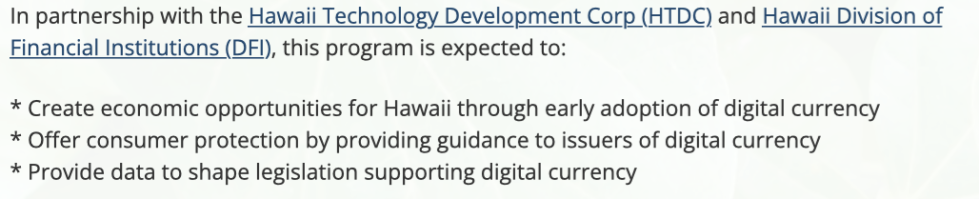
The DFI started the DCIL in 2020 with the Hawai‘i Technology Development Corporation (HTDC). It aimed “to explore the landscape of digital currency activity within the state while assessing the regulatory framework required for companies specializing in digital currency.”
DCIL aims to support crypto adoption in Hawaii. Source: DCCA
The research project found that the activities conducted by crypto-related companies “did not align with the concept of money transmission,” as stated in Chapter 489D of the Hawai’i Revised Statuses. Cryptocurrency firms had to obtain a money transmitter license to operate in the state before the DCIL.
According to the press release, the DFI attempted to propose a “special digital currency licensing scheme” throughout the project but couldn’t provide one offering sufficient protection for customers.
As a result, crypto companies are no longer required to obtain the Hawaii-issued MTL. Starting July 1, firms can continue operating within the state as an unregulated business. Nonetheless, these companies are responsible for conforming to the applicable federal licensing or registration requirements.
Crypto firms must comply with “any pertinent federal regulatory requirements involving consumer protection, anti-money laundering measures, etc.,” including those emitted by the Financial Crimes Enforcement Network (FinCEN), the Securities and Exchange Commission (SEC), and the Financial Industry Regulatory Authority.
Hawaii Authorities Issue Warning
Iris Ikeda, Banking Commissioner at DFI, emphasized the invaluable insight provided by the DCIL. According to Ikeda, the research project helped Hawaii’s regulators to understand the rapidly evolving crypto industry:
This project has been instrumental in shaping our understanding of the industry’s needs and safeguarding the interests of consumers and the broader financial system. The conclusion of the DCIL marks a milestone reflecting a commitment to balancing innovation and regulatory responsibility.
Additionally, the Banking Commissioner urged investors to remain vigilant about scams and assured the DFI will continue to work on “ensuring that consumers are aware of the risks associated” with the industry.
In June, the Kaua‘i Police Department (KPD) warned the county residents about an ongoing crypto scam. Per the report, the scammers impersonate law enforcement officers to extort victims.
The caller informs the victim there’s an alleged warrant for their arrest and they must pay a fine with crypto to avoid detention. The scammers use real information about the victim to make the scam appear credible. Additionally, they manipulate the caller ID number to make it look like a government agency call.
The police offered some guidelines to prevent such scams, including not giving any personal or financial data to unknown callers, not answering strange phone numbers, and not corroborating personal information if the caller asks to “confirm it.”
The KPD also stressed that fines are not imposed unless an individual has appeared in court. If one is imposed, it will be in open court, reduced to writing, and will not be payable with a gift card number or cryptocurrency. Ultimately, Kaua’s police urged investors to be careful and inform themselves before paying.
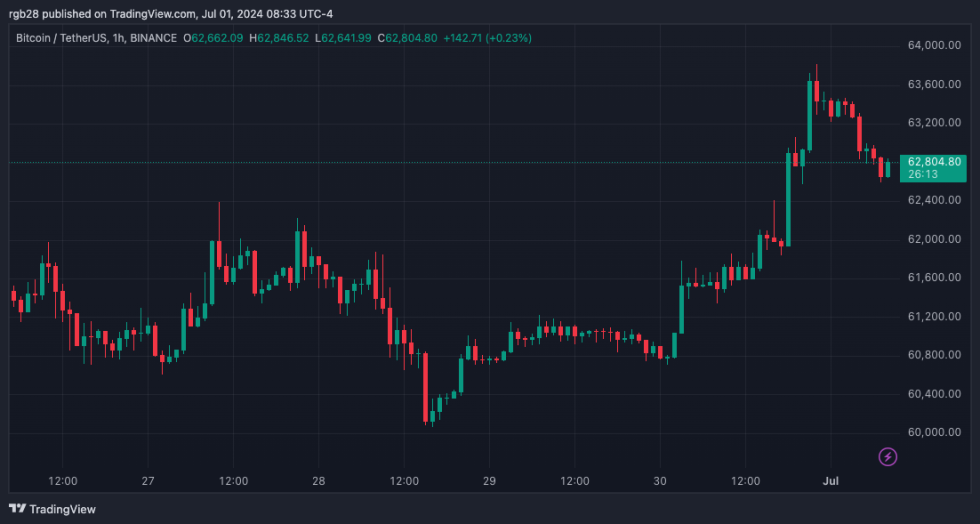

Bitcoin (BTC) is trading at $62,804 in the five-day chart. Source: BTCUSDT on TradingView
Featured Image from Unsplash.com, Chart from TradingView.com
Credit: Source link